There's a specific feeling when you press the gas and the car just doesn't go anywhere, wheels spinning, engine revving, no progress. Whether it's a soft shoulder after rain, a patch of ice, or a slide into a ditch, here's how to handle it.
Stop Spinning the Tires
The instinct is to give it more gas, but spinning tires dig deeper into mud or snow rather than climbing out of it, and they can also overheat the transmission in a front-wheel-drive car. If the first gentle attempt doesn't move you, stop and assess rather than continuing to press the issue.
What You Can Try Yourself
- Clear the area around the tires. Remove built-up mud, snow, or debris from in front of and behind the drive wheels.
- Add traction. Sand, gravel, cat litter, or even floor mats placed under the drive wheels can sometimes provide just enough grip.
- Rock gently. Shifting between drive and reverse in short, gentle bursts (only if your vehicle handles this safely) can sometimes walk a car out of a shallow spot.
- Straighten the wheels. Turned wheels dig a deeper trench. Straight wheels give you the best chance of rolling out.
When It's a Winch-Out Job
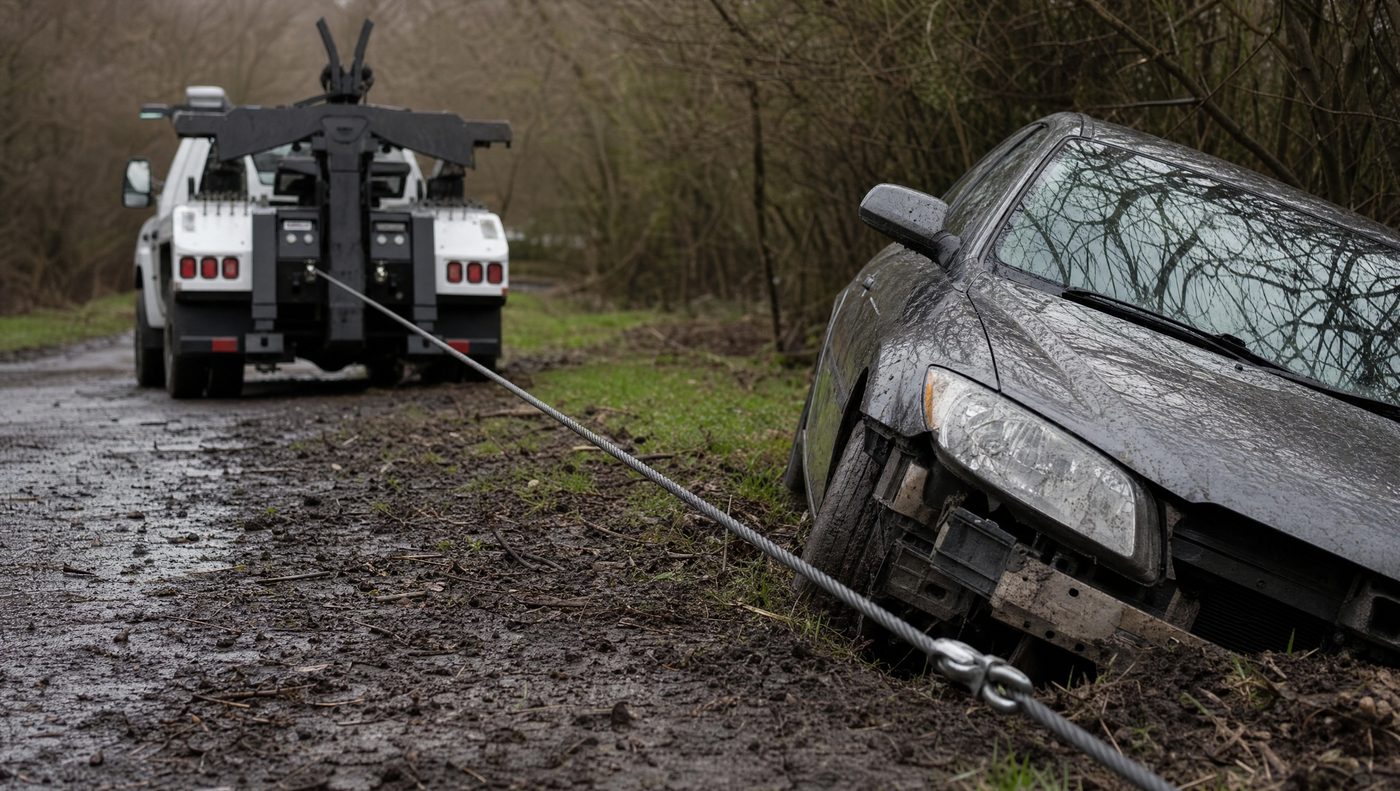
If the car is genuinely stuck, sunk to the frame, angled into a ditch, or wedged against something, that's the point to stop trying and call for a proper winch-out recovery. A tow truck uses a rated steel cable and the right anchor points to pull your vehicle back onto solid ground without adding damage to the frame or bumper, which is exactly what tends to happen when well-meaning bystanders try to push, pull with a strap tied to the wrong spot, or use another car to yank it free.
Winter Conditions in Georgia
Metro Atlanta doesn't see snow often, but when an ice storm or a hard freeze does hit, the roads catch a lot of drivers off guard, especially on hills and bridges. A car that slides off the road in those conditions usually isn't damaged, just stuck, and a winch-out gets it back on solid ground quickly.
What Happens After the Winch-Out
Getting the car unstuck doesn't always mean it's drivable afterward. If there's damage, or if you're not confident driving it after the ordeal, we can follow up the recovery with a standard tow to a repair shop or your home, all from the same call.
- We assess the angle, terrain, and the vehicle's condition before pulling.
- A heavy-duty winch cable rated for cars, trucks and SUVs does the work.
- Proper anchor points protect the frame and bumper from damage.
- A follow-up tow is available on the spot if the vehicle needs it.
Stuck in a ditch or a soft shoulder anywhere in our coverage area? Don't spin the tires deeper. Call us and we'll pull you out safely.