Not every vehicle can be towed the same way, and this is the single most common mistake we see other companies make: sending a standard wheel-lift truck for a car that needed a flatbed. If you drive an all-wheel-drive vehicle, a lowered car, or anything with limited ground clearance, this is worth reading before you're the one making the call.
Why AWD Vehicles Are Different
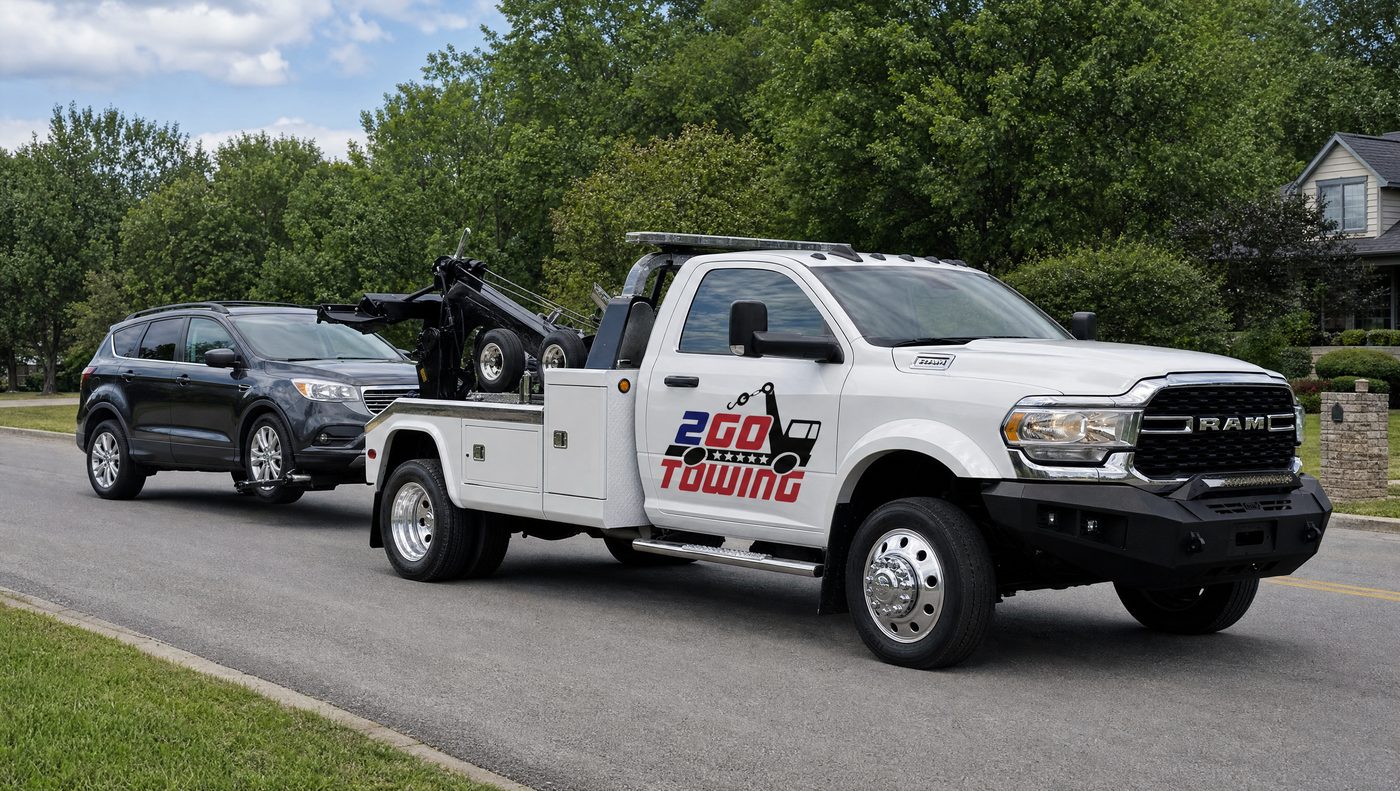
Wheel-lift towing raises one end of the car while the other end's wheels stay on the pavement and roll along behind the truck. For a standard front-wheel or rear-wheel-drive car, that's fine, the free-rolling wheels aren't connected to anything that spins. On an all-wheel-drive or four-wheel-drive vehicle, though, the drivetrain connects all four wheels together. Towing it with two wheels on the ground can force the drivetrain to turn without lubrication properly circulating, and on some vehicles, that leads to real transmission or transfer case damage, sometimes within a few miles.
Why Lowered Cars Need Extra Care Too
A lowered car sits closer to the ground by design, which is exactly the problem for a standard tow setup. Wheel-lift equipment, ramps, and even the tow truck's own angle of approach can scrape a front splitter, a lip kit, or the undercarriage if the driver isn't set up for it. A flatbed with the right loading angle avoids all of that, moving the car without a single new scratch.
What to Tell the Dispatcher
- "It's all-wheel-drive" or "it's four-wheel-drive", every time, even if you're not sure it matters.
- "It's lowered" or "it has a body kit", so they bring the right ramps and loading angle.
- The make and model, since some vehicles have known clearance issues even if they're not visibly lowered.
What Proper Equipment Looks Like
Our flatbed and wheel-lift service carries both, and we choose based on what your car actually needs, not what's easiest for us. That means:
- Flatbed transport for AWD, 4x4, lowered cars, and long-distance moves.
- Wheel-lift for fast, low-impact local tows on standard drivetrain vehicles.
- Straps and soft-tie options instead of hooks for delicate or modified vehicles.
The same care applies to classic and specialty cars, where a scratch matters even more, and to any vehicle where the wrong equipment turns a routine tow into an expensive mistake.
A Quick Gut Check
If you're not sure whether your vehicle needs a flatbed, ask yourself: does it have "AWD," "4Matic," "xDrive," "Quattro," "4WD" or similar badging? Does it sit noticeably lower than stock, or scrape on speed bumps? Either answer is a good reason to say so when you call, rather than finding out the hard way.
Need a tow for an AWD or lowered vehicle anywhere in our coverage area? Tell us up front and we'll send the right truck the first time.