A tire failure at highway speed is loud, sudden, and a little scary, even when you know exactly what's happening. The instinct to pull over immediately and deal with it is right, but how you do it matters more than most people realize.
The First Thirty Seconds
- Don't brake hard. Ease off the gas and let the car slow gradually. Hard braking on a blown tire can pull the car sideways.
- Grip the wheel firmly. A flat can tug the steering. Hold steady and keep the car straight.
- Signal and move right toward the shoulder or the nearest exit, gradually, not with a sharp swerve.
- Get as far off the traffic lane as possible. Every extra foot between your car and passing traffic matters.
Once You're Stopped
- Turn on your hazard lights immediately.
- If you have flares or a warning triangle, place them behind the vehicle, but only if you can do it without walking near live traffic.
- Get everyone out of the vehicle and away from the traffic side, ideally behind a guardrail if one is available.
- If you're in a genuinely dangerous spot, like a narrow shoulder on a fast highway, stay in the car with your seatbelt on and call for help rather than stepping out into traffic.
Should You Change It Yourself?
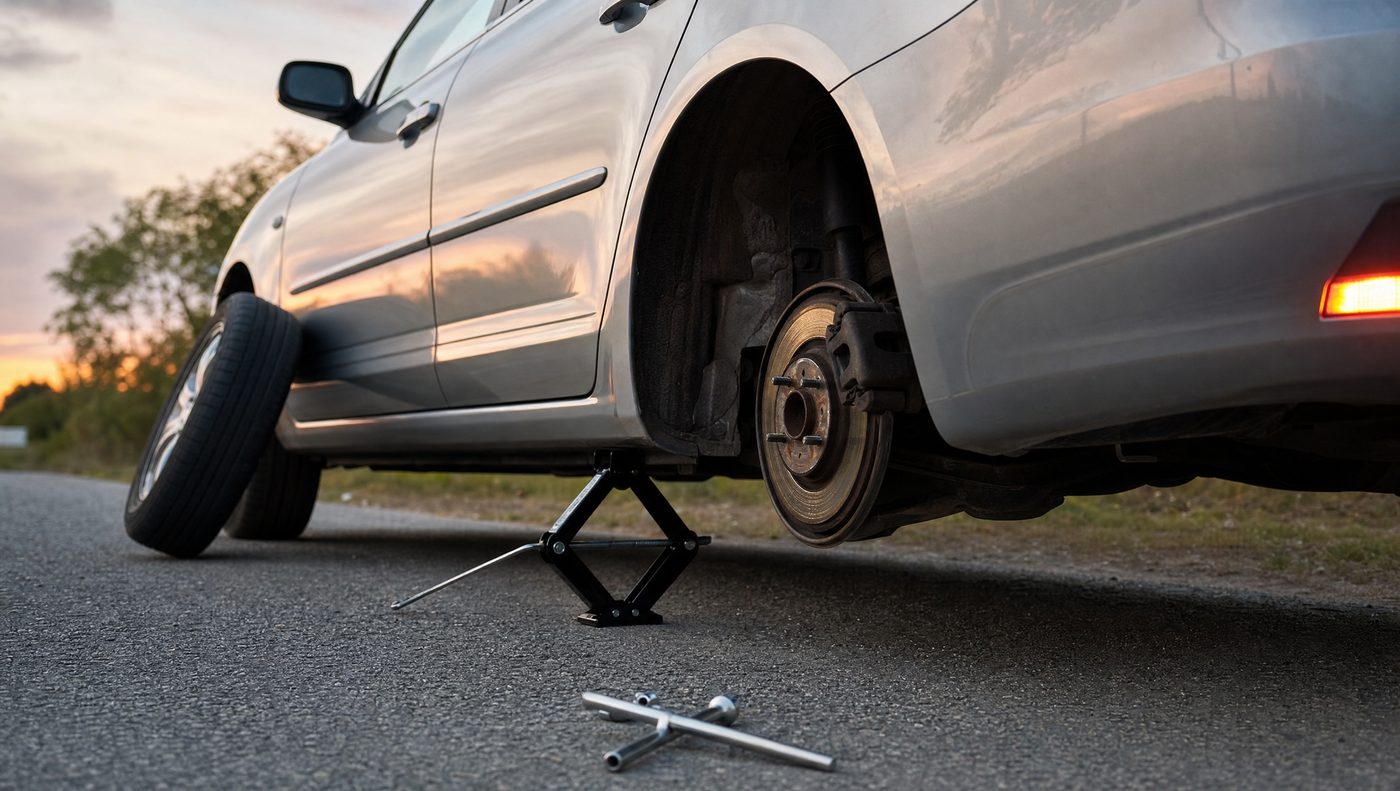
On a quiet residential street, changing your own tire is usually fine if you're comfortable doing it. On a highway shoulder with traffic passing at 60-plus miles an hour, it's genuinely dangerous, jacks fail, cars drift, and you're kneeling with your back to traffic. This is exactly the situation roadside tire service exists for: we come to you, install your spare safely, and get you moving again without you having to be the one kneeling on the shoulder.
After You're Back on the Road
A spare tire is a temporary fix, not a permanent one. Most spares are rated for limited mileage and lower speeds. Get the damaged tire properly patched or replaced at a shop as soon as you reasonably can, rather than driving on the spare for weeks.
What Actually Causes Blowouts
- Underinflated tires flex more and build up heat, which is one of the most common causes of highway blowouts.
- Worn tread reduces a tire's ability to handle road debris and heat.
- Road hazards: potholes, curbs, and debris, are simply more common on some routes than others.
- Overloading a vehicle beyond its rated capacity puts extra stress on every tire.
Checking tire pressure monthly and keeping an eye on tread depth prevents a large share of the flats we respond to.
Stuck with a flat anywhere between Dallas, GA and Sandy Springs? Call us and we'll come to you.